
Neural-Injury Assessment Test™
Biomarker Panel
Objective Biomarker Data Related to the Brain and Nervous System
The Neural-Injury Assessment Test™ Biomarker Panel provides objective biological data through the measurement of blood-based protein biomarkers associated with brain injury and the biological processes of the brain and nervous system. The panel is designed to support patient evaluation, longitudinal monitoring, and informed clinical decision-making.
Provider Order Required
Blood Sample
Turnaround time:
7-10 business days

Commonly Reported Symptoms
Reported in Neuroinjury, Neuroinflammation, Neurotoxicity, and Neurodegeneration

Brain Fog

Difficulty Concentrating

Dizziness

Nausea

Neck Pain

Headaches/Migraines

Personality and Mood Changes

Light/Sound Sensitivity

Anxiety/Depression

Difficulty Finding Words

Fatigue

Sleep Disturbances

Irritability

Reduced Mental Clarity

Sensitivity to Smells

Memory Issues

Vision Changes

Balance/Coordination Issues

Slower Processing

Increased Emotional Reactions
What the Test Measures
4 Protein Biomarkers
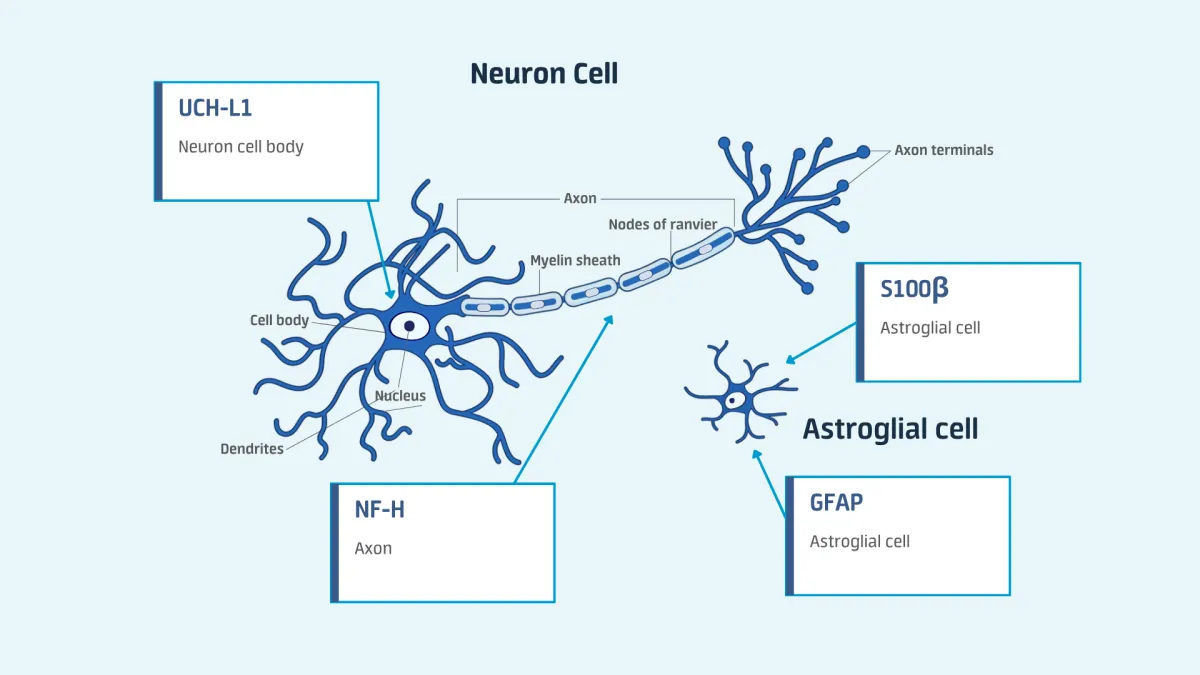
GFAP (Glial Fibrillary Acidic Protein)
GFAP is a protein released from astrocytes, specialized support cells that help maintain the structural support and normal function of the brain and nervous system and respond to cellular injury, inflammation, and repair processes.
Associated Processes:
Astrocyte Activation: Activation of support cells that respond to injury and inflammation.
Cellular Injury and Repair: Biological changes associated with injury and the recovery process.
Reactive Gliosis: The brain's natural repair response following cellular injury that may involve protective scar tissue formation.
UCH-L1 (Ubiquitin C-terminal Hydrolase L1)
UCH-L1 is a protein found primarily within neurons, the specialized cells responsible for transmitting information throughout the brain and nervous system. It plays an important role in maintaining normal neuronal function by regulating protein turnover, supporting cellular health, and helping remove and recycle damaged proteins within nerve cells.
Associated Processes:
Neuronal Function: Normal cellular activities that support the health, maintenance, and function of nerve cells.
Protein Recycling and Cellular Maintenance: The removal and recycling of damaged or unnecessary proteins to help maintain healthy neuronal function.
Cellular Stress Responses: Biological changes that may occur when neurons experience injury or cellular stress.
Neuronal Integrity: The maintenance of healthy nerve cells and the structures necessary for normal brain and nervous system function.
S100β (S100 Calcium-Binding Protein B)
S100β is a protein produced primarily by astrocytes, specialized support cells that help maintain the normal function of the brain and nervous system. It is involved in cellular communication, regulation of calcium within cells, and the brain's response to injury, inflammation, and repair processes.
Associated Processes:
Astrocyte Activation: Activation of support cells that respond to injury, inflammation, and cellular stress.
Blood-Brain Barrier Function: Biological processes involved in maintaining the protective barrier that helps regulate what enters and leaves the brain.
Cellular Injury and Repair: Biological changes associated with cellular injury and the body's natural repair processes.
Neuroinflammatory Responses: The brain's immune and inflammatory response to injury, stress, or neurological changes.
NF-H (Neurofilament Heavy Chain)
NF-H is a structural protein found primarily within axons, the long fibers that allow nerve cells to communicate throughout the brain and nervous system. It helps maintain the strength, structure, and stability of these communication pathways and supports the transport of essential materials within nerve cells.
Associated Processes:
Axonal Integrity:
The maintenance of healthy nerve fibers that support communication between nerve cells.
Neuronal Structural Support:
The biological framework that helps maintain the strength, stability, and organization of nerve cells and their connections.
Axonal Transport Support:
The structural organization of axons that helps facilitate the movement of proteins, nutrients, and other materials within nerve cells.
Diffuse Axonal Injury:
Microscopic injury to nerve fibers that may occur following trauma and may not always be visible on traditional imaging.
Why Choose This Test
Objective Biological Measurement
Measures biological signals associated with brain injury and neurological changes, independent of symptom reports, and may detect changes not visible on traditional imaging in certain cases.
Contextualize Symptoms
Protein biomarkers can help contextualize symptoms by providing objective data associated with brain injury and nervous system changes.
Tracking Changes Over Time
Supports monitoring biomarker trends over time to help evaluate injury and recovery patterns.
Scientific Resources
The biomarkers and genetic markers evaluated by the Neural-Injury Assessment Test™ Complete Panel have been studied in neuroinjury, neuroinflammation, neurotoxicity, and neurodegeneration research. The following resources provide additional scientific resources.
Important Information
A licensed healthcare provider order is required.
Blood sample collection may be performed in-office, at an outpatient collection center, or through mobile phlebotomy services.
Analysis is performed in a CLIA-certified laboratory (#06D2174124).
Important Information
Analysis is performed in a CAP-accredited laboratory (#8647015).
Results should be interpreted alongside clinical history, symptoms, imaging findings, and neurocognitive assessments.
This test is not intended to function as a standalone diagnostic tool.