
Supporting Veterans With Invisible Wounds
You Served Our Country—Now Let Us Support Your Next Steps
Brain injuries resulting from blast exposure, repetitive head impacts, training exercises, and combat often go unrecognized for years. Many service members become the "walking wounded," appearing outwardly healthy while living with the long-term effects of traumatic brain injury.
It is estimated that approximately 1 in 10 to 1 in 20 active-duty service members are living with the long-term consequences of mild traumatic brain injury (mTBI). Symptoms such as headaches, brain fog, memory problems, mood changes, sleep disturbances, and difficulty concentrating may not become fully apparent until performance declines or functional challenges emerge. Since many of these symptoms often overlap with stress and PTSD, brain injury can be difficult to recognize.
Our neurodiagnostic solutions provide objective biological data, giving your healthcare provider a more complete picture when interpreted alongside your symptoms, medical history, physical examination, imaging, and other relevant clinical information.
0+
U.S. Service members have been diagnosed with a brain injury since 2000, and roughly 83% were classified as mild concussion.
0–0
Veterans are estimated to be living with the long-term effects of brain injury, and many continue to face barriers to comprehensive care
0%
Of all veterans screen positive for brain injury
0%
Standard CT scans return normal results where brain injury is clinically evident
How It Works

1. A Licensed Healthcare Provider Orders Testing
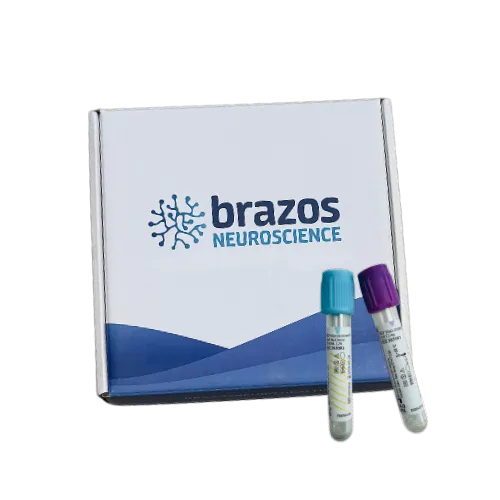
A licensed healthcare provider orders the test kit through our online provider portal.
2. Sample Collection Is Coordinated
Blood samples are collected through a simple blood draw using one of three convenient options: in-office collection (if offered by your provider), mobile phlebotomy, or an outpatient collection site.
*Blood collection options are based on provider preference and availability in your area.

3. Laboratory Analysis
Your client’s sample is shipped to our CLIA-certified and CAP-accredited laboratory using prepaid shipping materials included with the test kit.
4. Results
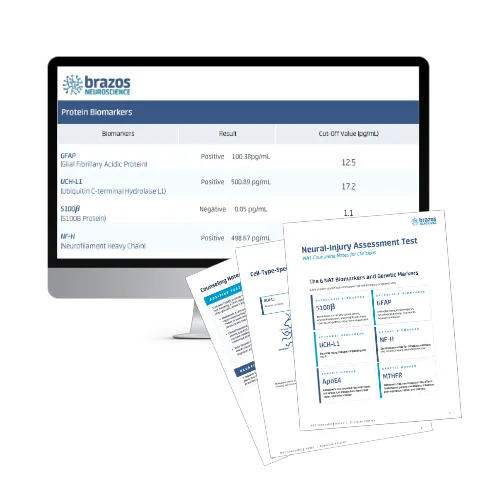
Results are returned to the ordering healthcare provider within 7–10 business days and include educational notes that may help support client discussions and care coordination.
How It Works
1. A Licensed Healthcare Provider Orders Testing
A licensed healthcare provider orders the test kit through our online provider portal.
2. Your Sample is Collected
Your blood sample is collected through a simple blood draw using one of three convenient options: in-office collection (if offered by your provider), mobile phlebotomy, or an outpatient collection site.
*Blood collection options are based on provider preference and availability in your area.
3. Laboratory Analysis
Your sample is shipped to our CLIA-certified and CAP-accredited laboratory using prepaid shipping materials included with your test kit.
4. Results
Once your results are ready, both you and your healthcare provider will be notified. Your provider will review your results with you. Results are available within 7–10 business days.
Why Did My Provider Recommend Neurodiagnostic Testing?
Provides deeper insights into factors that may influence how your brain responds and recovers after injury.
Supports informed conversations and care planning with your healthcare provider
Tracks biological changes over time using objective data
Offers objective documentation for your health records when additional information may be beneficial
Evaluates your biological status before and after treatment or intervention
A helpful resource to print and hand out to your patients during their visit.
This simple guide explains the testing process, what to expect, how your sample is collected, and when results are available.
Explore Testing Solutions
clinical baseline
Neural-Injury Assessment Test™
Complete Panel
Protein biomarkers and genetic markers providing objective biological data on cellular injury, change, and neurological risk factors.
4 PROTEIN BIOMARKERS
GFAP • UCH-L1 • S100β • NF-H
2 GENETIC MARKERS
APOE • MTHFR
Genetic markers are evaluated once because DNA remains constant throughout life.
serial monitoring
Neural-Injury Assessment Test™
Biomarker Panel
Designed for longitudinal monitoring using protein biomarkers associated with cellular injury and change.
4 PROTEIN BIOMARKERS
GFAP • UCH-L1 • S100β • NF-H
coming soon
Neural-Injury Assessment Test™
In Development
A forthcoming panel evaluating hormones associated with neuroendocrine function and change.
clinical baseline
Neural-Injury Assessment Test™
Complete Panel
Protein biomarkers and genetic markers providing objective biological data on cellular injury, change, and neurological risk factors.
4 PROTEIN BIOMARKERS
GFAP • UCH-L1 • S100β • NF-H
2 GENETIC MARKERS
APOE • MTHFR
Genetic markers are evaluated once because DNA remains constant throughout life.
serial monitoring
Neural-Injury Assessment Test™
Biomarker Panel
Designed for longitudinal monitoring using protein biomarkers associated with cellular injury and change.
4 PROTEIN BIOMARKERS
GFAP • UCH-L1 • S100β • NF-H
coming soon
Neural-Injury Assessment Test™
In Development
A forthcoming panel evaluating hormones associated with neuroendocrine function and change.
Neurodiagnostic Testing Solutions
Objective Biological Data for Neurological Function and Change
clinical baseline
Neural-Injury Assessment Test™
Complete Panel
Protein biomarkers and genetic markers providing objective biological data on cellular injury, change, and neurological risk factors.
4 PROTEIN BIOMARKERS
GFAP • UCH-L1 • S100β • NF-H
2 GENETIC MARKERS
APOE • MTHFR
Genetic markers are evaluated once because DNA remains constant throughout life.
serial monitoring
Neural-Injury Assessment Test™
Biomarker Panel
Designed for longitudinal monitoring using protein biomarkers associated with cellular injury and change.
4 PROTEIN BIOMARKERS
GFAP • UCH-L1 • S100β • NF-H
coming soon
Neural-Injury Assessment Test™
In Development
A forthcoming panel evaluating hormones associated with neuroendocrine function and change.
clinical baseline
Neural-Injury Assessment Test™
Complete Panel
Protein biomarkers and genetic markers providing objective biological data on cellular injury, change, and neurological risk factors.
4 PROTEIN BIOMARKERS
GFAP • UCH-L1 • S100β • NF-H
2 GENETIC MARKERS
APOE • MTHFR
Genetic markers are evaluated once because DNA remains constant throughout life.
serial monitoring
Neural-Injury Assessment Test™
Biomarker Panel
Designed for longitudinal monitoring using protein biomarkers associated with cellular injury and change.
4 PROTEIN BIOMARKERS
GFAP • UCH-L1 • S100β • NF-H
coming soon
Neural-Injury Assessment Test™
In Development
A forthcoming panel evaluating hormones associated with neuroendocrine function and change.
The Brazos Difference
Support
Our team helps coordinate each step of the testing process, from scheduling your blood draw to delivering results to your healthcare provider.
Confidential & Secure
Your client’s information is protected through HIPAA-compliant processes designed to safeguard your privacy and security.
Quality You Can Trust
CAP accreditation, CLIA certification, and validated testing methodologies reflect our dedication to quality, accuracy, and the delivery of reliable neurodiagnostic information.
Convenient
Flexible blood collection methods, including in-office, mobile, and outpatient phlebotomy blood collection, help make your testing process simple and accessible.